

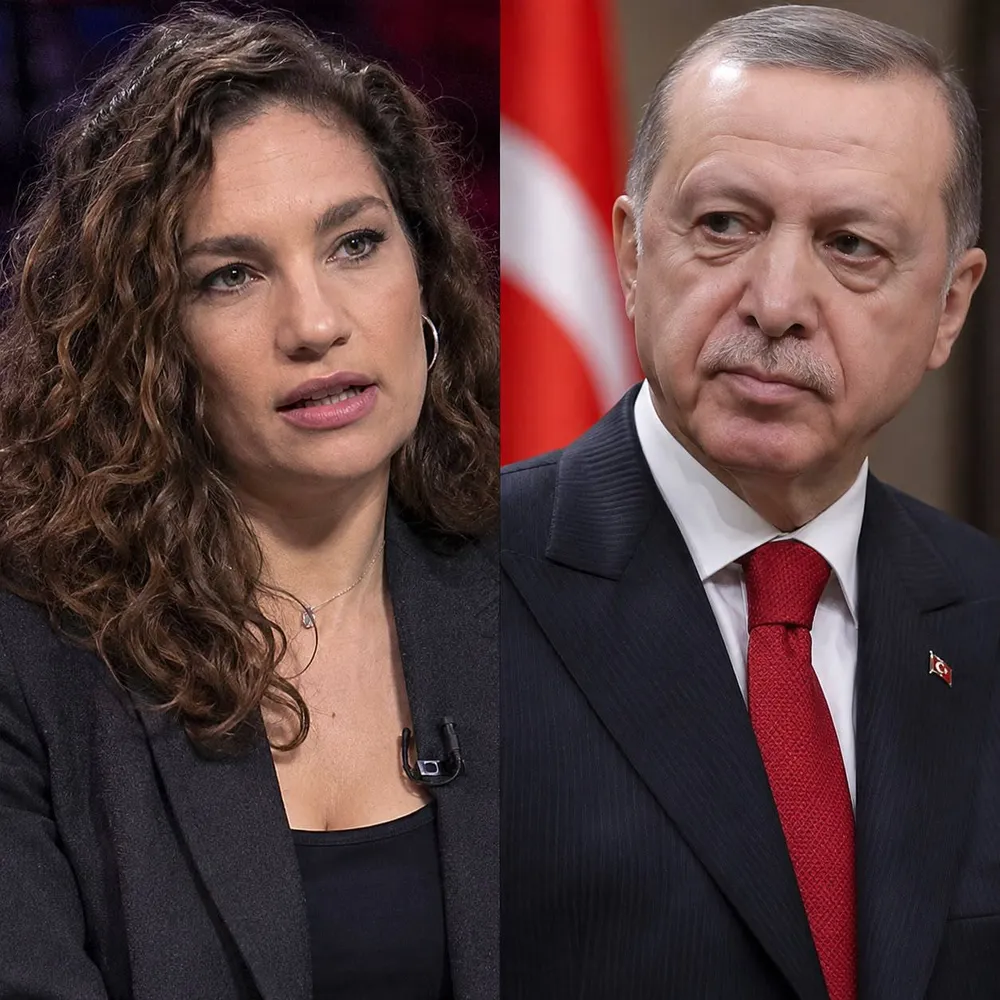
Journalist Nevşin Mengü came up with a highly controversial proposal to overcome Türkiye's political atmosphere and governance crisis. Mengü, who drew an unconventional road map to eliminate the current political deadlock, called for a radical change in the management style. This emergence goes beyond being just a criticism of the system and offers a scenario that redefines the position of the figures at the highest levels of politics.
At the center of the proposal is President Recep Tayyip Erdoğan and the structure of the executive power. While Mengü argued that Türkiye should return to the parliamentary system, he put forward a concrete model on what formula this transition should take place. This model is capable of shaking the existing political balances to their foundations.
Parliamentary System and Authority Proposal from Nevşin Mengü
The formula presented by Mengü is based on a very specific structure. The experienced journalist states that President Recep Tayyip Erdoğan should be re-elected for 7 years with the powers he had before the constitutional amendment in 2017. This envisages a break with the current Presidential System of Government and a redistribution of powers. Stating that the concentration of authority in the current system makes political processes difficult, Mengü argues that a balance mechanism can be established with this proposal.
The proposal in question changes not only the boundaries of authority but also the political character of the office. According to Mengü, Erdoğan's transition to a supra-partisan position may be the key to overcoming the current political polarization and deadlock. In this scenario, the office of the President takes on a more unifying structure, free from the daily conflicts of political parties. This means that the office that represents the unity of the state is protected from the harsh winds of politics.
Political Obstruction and Nonpartisan Presidency
Turkish politics has been experiencing a serious deadlock in recent years due to the balance between parliamentary arithmetic and executive power. The narrowing of dialogue channels between political parties directly affects decision-making processes. The model proposed by Mengü aims to break this deadlock and turn the President into a balancing element rather than a direct actor of political competition.
If this model is implemented, while political parties continue their struggle among themselves, the highest authority of the state can remain outside of this struggle and position itself as a superior identity. This approach offers a hybrid structure that combines the collective management approach brought by the parliamentary system with Erdogan's current political weight. The fact that the issue is at the center of the agenda proves that the proposal is seen as a management strategy, not just an idea.
The Future of Politics and Social Reflections
If such a proposal finds a response in the political arena, it may lead to the redistribution of existing political cards. The reaction of both the ruling bloc and the opposition wing to this radical scenario could shape Türkiye's next decade. It is expected that this proposal will widen the gap between the defenders of the current system and those who want to change the system or evolve into a new basis for compromise.
This statement, which reminds us that politics is not just about elections, but also the direct impact of the form of government on social peace, seems likely to spark discussions in the coming days. The response of political actors to this proposal may open the door to a new era in Türkiye's democratic journey or may further deepen the existing political tension.
Source: MHA




COMMENTS (0)
Community CommentsNo comments yet. Be the first to share your thoughts on this story!