

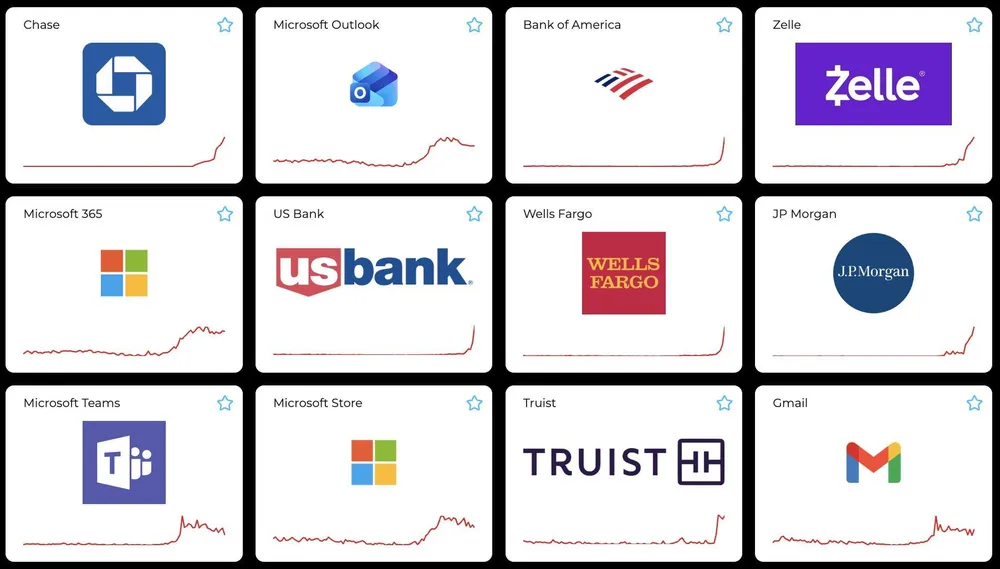
Many financial institutions operating across the United States have faced a major operational crisis due to technical glitches in their systems since this morning. Access issues reported across US Banks prevented users from logging into digital platforms and led to a complete halt of critical financial transactions such as money transfers.
In this period when millions of customers cannot carry out their transactions through banking applications, an atmosphere of panic is also felt. Users cannot check their account balances and make urgent payments. The current situation has once again revealed the fragility of the digital backbone of the financial system.
Access Block and User Victimization in Digital Channels
The disruption was not limited to just one bank. This disconnection, seen simultaneously in the systems of different institutions, raised the question of whether the problem was a local error or a broader infrastructure problem. User complaints focus on the fact that mobile applications are not opened, internet banking passwords are not accepted, and most importantly, the sent funds do not reach the other party.
The failure of the systems directly affected not only individual users but also businesses that conduct their commercial activities entirely through digital channels. Breaking the payment chain may also trigger the risk of a short-term liquidity crunch in the markets. Although the banks’ technical teams are working hard to solve the problem, it is not yet clear when the systems will start operating at full capacity.
Financial Infrastructure and Cyber Security Risks
Such system crashes have reignited the debate about cybersecurity and infrastructure resilience, which is the most sensitive point in the modern financial world. No matter how advanced the technological infrastructures of financial institutions are, a central server error or a cyber attack attempt can paralyze the entire system. Although no official statement has yet been made regarding the source of the current situation, industry stakeholders are considering the possibility of a technical update error or an unexpected cyber intervention.
In an era when global financial networks are so interconnected, a halt in the banking system of a giant economy like the USA will not remain just a local problem. In digitalized banking models, momentary downtime of systems is a serious risk factor that can lead to a loss of social trust.
Uncertainty and Confidence Problems in Markets
This disruption in the banking system also created a wave of uncertainty in financial markets. Investors and institutions are watching how disruptions in transfer transactions will affect market depth. The transparency of banks in this process, customer loyalty and the response speed of the system will directly determine the reputation of institutions in the coming days.
As the process progresses, the reports that regulatory institutions and supervisory mechanisms receive from banks will play a critical role. After this crisis, it can be expected that new regulations will be brought to the agenda to make digital banking infrastructures more resilient. Rebuilding users’ trust in digital systems seems to be a much more challenging process than restoring the systems.
Source: MHA





COMMENTS (0)
Community CommentsNo comments yet. Be the first to share your thoughts on this story!