

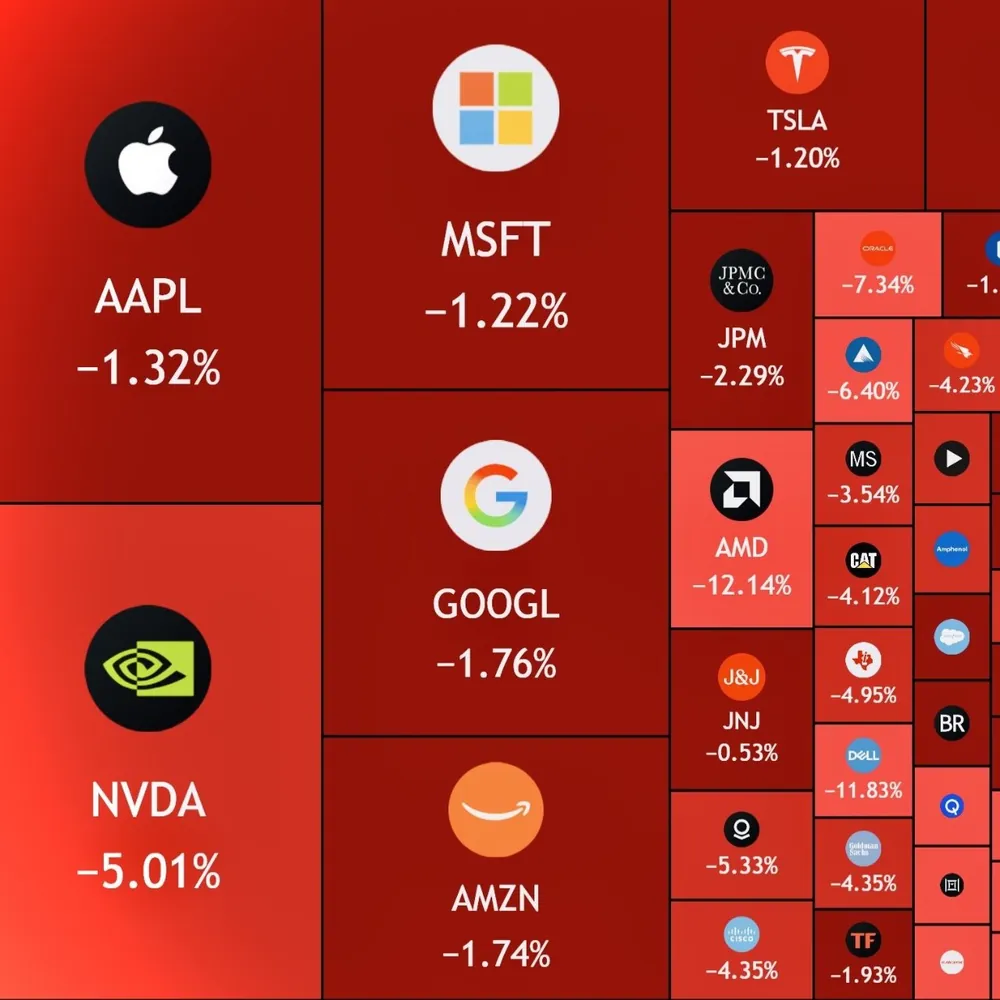
Global financial markets are experiencing a deep shock with the shocking data coming from the US stock markets today. While the uncontrolled sales wave seen in Wall Street indices caused investors to close positions in panic, 1.8 trillion dollars were erased from the market value in a single day. This sharp decline, especially in the Nasdaq, one of the leading technology-oriented indices, and the comprehensive S&P 500 indices, once again revealed the extent of the uncertainties in the global economy. With the sudden decrease in investors' risk appetite, the losses in the shares of giant companies dragged the total market volume into a downward abyss.
Behind the Scenes of the Tremor in the Markets
There is not a single reason behind this massive depreciation, but a "perfect storm" of interconnected macroeconomic factors. Experts state that the tight monetary policy implemented by the Federal Reserve (Fed) and the uncertainty about the course of interest rates have become the biggest point of concern for investors. In addition, the risk of high inflation becoming permanent and discussions about overvaluation in the technology sector played a triggering role in large funds' decision to switch to cash. Signals that growth expectations, especially artificial intelligence-focused, have reached saturation, caused the speculative rise in the market to be replaced by a sharp retreat.
According to market analysts, this situation can be read not only as a simple profit sale, but also as a process of renewing confidence. Investors' concerns that economic growth would slow down and the risk of recession would increase triggered a large capital flow from stock markets to safe havens (gold, bonds, etc.). This situation caused liquidity balances to deteriorate and market volatility to approach historical levels. Financial institutions warn that such sudden declines can have long-term effects on market psychology.
What to Expect Next? In the coming period, all eyes are on the statements to be made by the Federal Reserve and future inflation data. If economic data continues to strengthen recession signals, it seems inevitable that this selling pressure in the stock markets will deepen. However, in order for the market to accept this sharp decline as a "correction" and stabilize, concrete evidence must come that interest rate cut expectations or economic growth has stabilized. In this period of uncertainty for investors, strategic caution and portfolio diversification are vital.






COMMENTS (0)
Community CommentsNo comments yet. Be the first to share your thoughts on this story!