
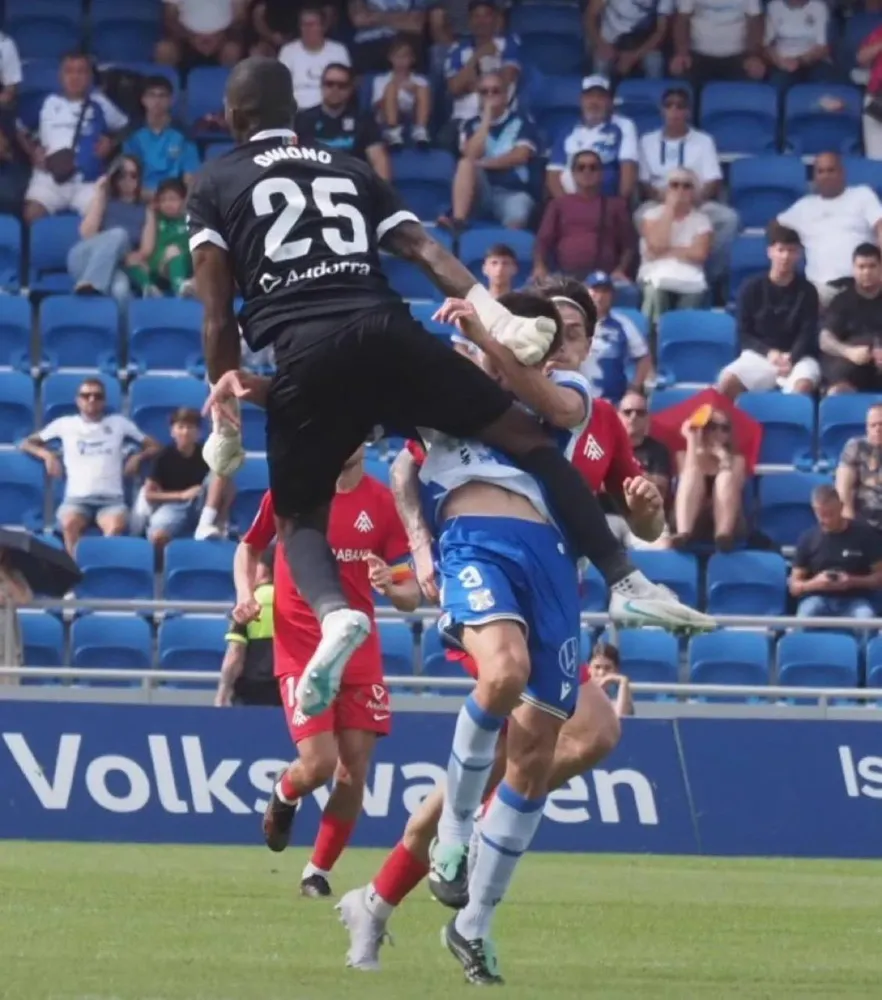
The football world was shaken by a tragic incident on the pitch and the harsh disciplinary decision that followed. While the death of a footballer as a result of a collision caused deep sadness in the sporting community, the decision taken by the Disciplinary Board sparked controversy. The 12-match ban imposed on Jesus Auno showed once again that football is not just a game, and how decisions made can impact a player's career.
Gerard Pique has taken a very clear position not to remain silent in this process. Stressing that what happened on the field was not intentional, but rather a completely unfortunate accident, and the experienced person believes that his player was placed in an unfair position. Pique, who stands behind Owono as owner of the Andorra club, is opposed to pinning responsibility for the tragedy on one person.
Disciplinary storm after an unfortunate incident
The accident began with physical contact that developed within seconds and was impossible to control. The tension of the match and the speed of the players made this collision inevitable. However, the fact that this physical contact led to death prompted the disciplinary committees to apply their harshest measures. Jesús Auno's 12-match ban has sparked great controversy in the context of football ethics and law.
Gerard Pique finds this harsh decision counter-intuitive. Noting that people tend to look for scapegoats in the face of tragedies they cannot understand, Pique says Awono has been unfairly blamed in the process. The words “We, as human beings, often feel the need to blame someone when we can't understand why such things happen on the field” are actually a criticism of this instant anger and reaction in the sporting world.
The difference between intention and incidents in football
The most important threshold in sports law is whether the act was intentional or merely an accident. In this case, given the seriousness of the collision and its consequences, the disciplinary committees give priority to deterrence. However, the fine line between the harsh tackles inherent in football and the aim of causing direct harm has become blurred with this decision.
Jesús Auno's situation is not limited to just one player being suspended. This sets a precedent for how the risks to which professional athletes are exposed on the field are managed and the legal consequences of these risks. If every mishap results in severe penalties, we may enter a period in which players avoid taking risks on the field and the nature of the game deteriorates.
The future of the decision and the expectations of the football public
This decision taken by the Disciplinary Committee created deep polarization in the world of football. While some see the need to achieve justice and ensure deterrence; Others believe, as Pique mentioned, that an accident should not punish a player's career so severely. New moves from the FC Andorra front will determine the course of the process.
The objection requests that will be submitted in the coming days will be the most important stage in this case. Pique's statement resonates not only as a defense of the club's owner, but also as a voice representing the conscience of football. This process may reshape sports law's view of the concept of "accident".
Source: GDH Sports



COMMENTS (0)
Community CommentsNo comments yet. Be the first to share your thoughts on this story!