

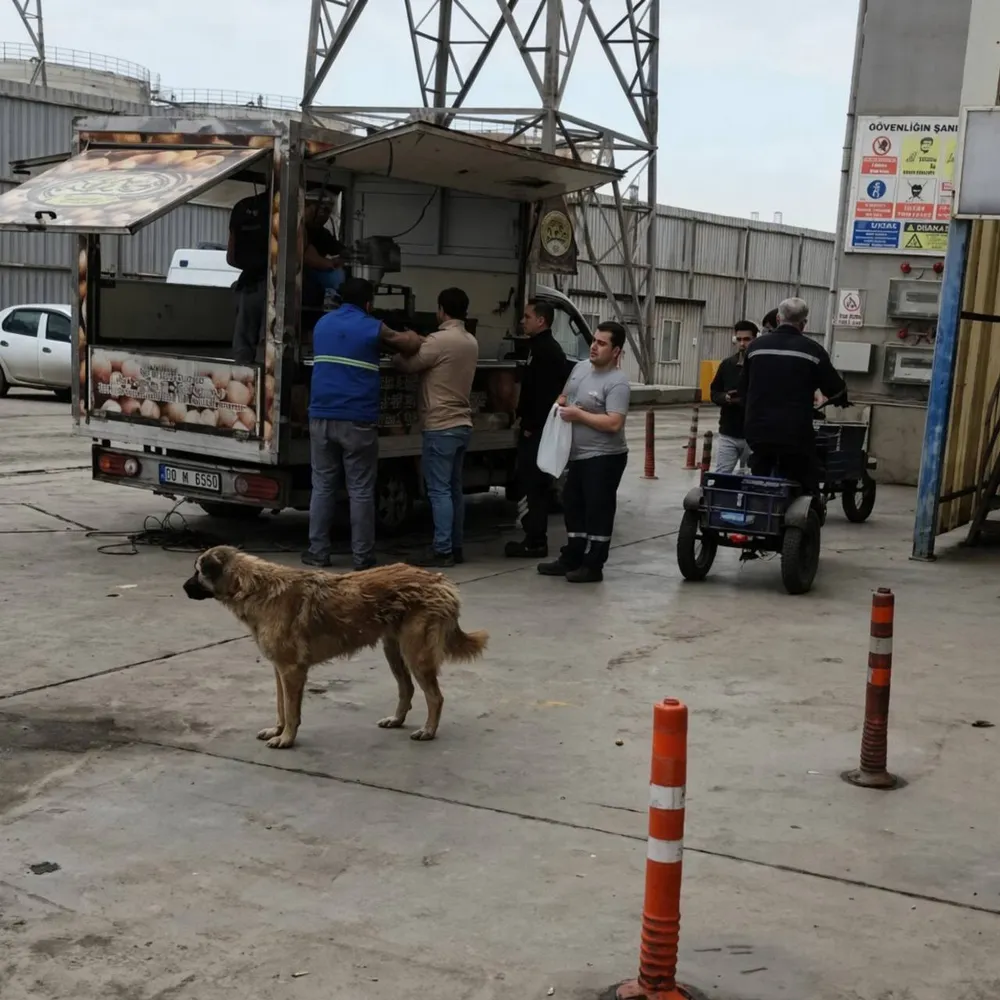
There was a different atmosphere in HABAŞ facilities that day. However, this was far from a celebratory atmosphere, and was under the shadow of a heavy sadness and a deep debate. After those dark days when 19 workers working in the factory lost their lives, the company owner Mehmet Rüştü Başaran decided to distribute lokma. The donuts distributed at the stands set up in the factory area were presented by stating that they were made in memory of the lives lost.
Images and information about the moments when the incident took place quickly became a public issue. The point of distribution had a symbolism beyond coincidence. The donuts were distributed in the shadow of the signs reminding us of the occupational safety rules in the factory. This visual detail started a wide wave of discussion on social media and in the business world.
The Tragic Contrast in the HABAŞ Field
This view at the factory site was quite shocking for the onlookers. On the one hand, there was the social pain caused by the 19 lives lost after a work accident, and on the other hand, there was a ritualistic practice carried out on the ground where this loss occurred. The fact that the lokma distribution took place at the exact spot where occupational safety warnings were posted reminded us of the extent of the tragedy in the field.
In an environment where workers were dying and safety measures were questioned, distributing food under the signs was perceived as a symbolic message. Although some people saw this as a form of commemoration, the majority argued that this situation did not correspond to the gravity of the loss. The signs were standing there; However, the safety culture that those signs were supposed to represent was shaken by the loss of 19 lives.
Occupational Safety Culture and Rituals
Workplace accidents in industrial facilities are not merely technical malfunctions; they are also events with profound social and legal consequences. The loss of 19 workers' lives in a factory is the most severe test of that facility's safety protocols, oversight mechanisms, and the importance placed on employee health. Although commemoration ceremonies or donut distributions held after such great losses are traditional forms of behavior, they become the target of criticism when they conflict with occupational safety awareness.
Security signs are not just metal signs in a facility. They are physical representations of the promise to protect the life safety of employees. Distributing donuts under these signs, during a period when there were casualties, raises questions about the security culture of the institution. Rituals risk remaining merely a temporary means of consolation if not supported by real change and security reform.
Social Memory and Responsibility
In such events, the public looks not only for commemoration ceremonies, but also for the full disclosure of the causes of lost lives and for concrete measures to be taken to prevent similar events from recurring. In the HABAŞ incident, people's reaction is towards the place where that bite is distributed and the security gap that that place represents, rather than the taste of the bite.
In the coming period, how the factory will update its safety standards and new steps regarding worker health will be the main determinants. The memory of 19 workers will live not only with the food distributed, but also with the need for security felt in every corner of the facility. Rather than ceremonies, society's expectation is that the workers under those signs will never share a similar fate again.
Source: Leftist Newspaper







COMMENTS (0)
Community CommentsNo comments yet. Be the first to share your thoughts on this story!